
Boost Curb Appeal with Landscaping Tips for Stunning First Impressions

A buyer can judge a home before stepping inside. The front yard, walkway, lawn, and entry all send a message fast. Good landscaping makes that message clear: this home is cared for.
Curb appeal does not require a full yard makeover. Smart plant choices, clean edges, healthy grass, and a clear path to the door can change how a home feels from the street.

First impressions start at the curb
The front yard frames the house. It can make a small home feel polished, a dated home feel fresher, and a plain exterior feel more complete.
Strong curb appeal helps in several ways:
It guides the eye
A clear path, trimmed plants, and balanced beds draw attention to the front door.
It signals good maintenance
Buyers often connect a neat yard with a well-kept home.
It adds warmth
Plants, color, and texture soften hard surfaces like siding, concrete, brick, and driveways.
It helps photos stand out
Listing photos often begin outside. A clean yard makes those first images stronger.
Even for homeowners who are not selling, better landscaping improves daily enjoyment. Pulling into a neat driveway feels good. Guests notice. Neighbors notice too.
Choose plants that fit the home and the climate
The best plants are not always the most dramatic ones. They are the ones that fit the space, grow well in the region, and stay attractive with reasonable care.
Start with the size of the home. A one-story house can get buried behind tall shrubs. A larger home may need bigger plantings to look balanced. Keep windows, steps, and porch railings visible.
Use layers for depth:
Low plants near the walkway
Medium shrubs in front of the house
Taller plants or small trees near corners or open wall areas
Native and climate-appropriate plants are a smart choice in most areas. They usually handle local weather better and often need less water once established.
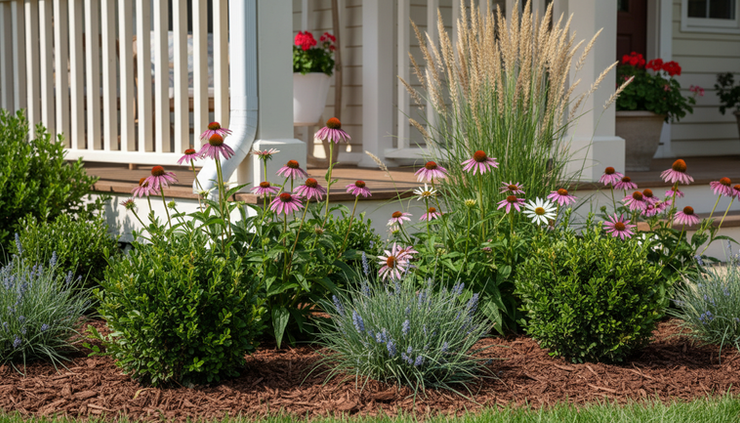
Mix plant types for a full look:
Evergreen shrubs for year-round structure
Perennials for repeat seasonal color
Ornamental grasses for movement
Small trees for height and shade
Groundcovers for bare spots and slopes
Avoid planting too close to the foundation. Give each plant room to reach its mature size. Crowded beds may look full at first, but they become hard to maintain.
Keep the lawn clean, healthy, and simple
A lawn does not need to look like a golf course. It needs to look cared for.
Focus on the basics:
Mow at the right height for the grass type
Keep edges sharp along sidewalks and beds
Water deeply when needed, based on local rules
Patch bare spots before they spread
Remove weeds before they take over
Rake leaves before they smother the grass
Clean edges make a huge difference. A quick pass with an edger can make an average lawn look much sharper. Fresh mulch also helps define beds and makes plants stand out.
If the lawn struggles year after year, look at the cause. Shade, poor drainage, compacted soil, and heavy foot traffic can weaken grass. In those areas, groundcovers, stepping stones, mulch beds, or shade plants may work better than forcing turf to grow.
For homes in dry regions, a smaller lawn with drought-tolerant beds can look better than a full yard of stressed grass. The goal is not more lawn. The goal is a front yard that looks intentional.
Design pathways that feel clear and welcoming
A pathway does more than connect the sidewalk to the door. It creates a sense of arrival.
A good front path should be:
Wide enough for two people to walk comfortably
Easy to see from the street
Safe underfoot
Consistent with the home’s style
Framed by plants or lighting
Straight paths feel formal and direct. Curved paths feel softer and more relaxed. Brick, flagstone, concrete pavers, gravel, and poured concrete can all work. The best choice depends on the house and the level of upkeep desired.
Avoid narrow walkways hidden by overgrown plants. They can make the entry feel cramped. Trim shrubs back from the path and keep steps clear.
Lighting also matters. Low path lights, porch lights, and small uplights near trees can make the home look welcoming at night. Good lighting improves safety too.

Use color, texture, and seasons with purpose
Landscaping looks best when it changes through the year without falling flat.
Color is the easiest place to start. Choose a simple palette that works with the home’s exterior. A white house may look crisp with purple, blue, and green plantings. A brick home may pair well with cream, deep red, soft yellow, or dark green.
Do not rely only on spring flowers. Plan for each season.
Spring can bring bulbs, flowering trees, and fresh mulch.
Summer can carry color through perennials, annuals, and healthy foliage.
Fall can add ornamental grasses, mums, and trees with strong leaf color.
Winter can still look good with evergreens, bark texture, berries, stonework, and lighting.
Texture matters just as much as color. Pair fine grasses with broad leaves. Mix glossy evergreens with soft perennials. Use rocks, wood, or mulch to add contrast.
A bed filled with one plant can look flat. A bed with too many plants can look messy. Aim for a clear rhythm. Repeat plants in groups of three, five, or seven for a calmer look.
Real examples show the value of better landscaping
Small projects can have a large visual impact.
One common project is replacing overgrown foundation shrubs. Many older homes have yews, boxwoods, or junipers that block windows and crowd the porch. Removing them and adding lower evergreens, flowering perennials, and fresh mulch can make the house look newer right away.
Another strong project is upgrading a worn front path. A cracked concrete walk can make an entry feel tired. Replacing it with pavers or clean poured concrete, then adding low plants and lighting, gives the front yard structure. It also makes the walk to the door feel easier.
A third example is reshaping a patchy lawn. A homeowner might reduce turf near a shaded front tree, add a curved mulch bed, plant shade-tolerant perennials, and create a stepping-stone path. The yard needs less mowing and looks more planned.
These changes can support property value because they improve buyer confidence. Real estate agents often point to curb appeal as a major factor in showing activity and perceived home condition. A polished exterior will not fix major repair issues, but it can help a home make a better first impression and stand out in a competitive market.
FAQ
What is the fastest way to improve curb appeal with landscaping?
Clean up the lawn, edge the walkway, trim overgrown shrubs, add fresh mulch, and place seasonal color near the entry. These steps are fast and visible.
Which plants are best for front yard landscaping?
Choose plants that fit the local climate and the amount of sun in the yard. Use evergreens for structure, perennials for color, and small trees or grasses for height and texture.
How often should landscaping be updated?
Basic maintenance should happen throughout the year. Larger updates, such as replacing shrubs or redesigning beds, may be needed when plants outgrow the space or the yard looks dated.
Can landscaping really affect home value?
Yes, it can affect how buyers view the home. Well-kept landscaping can improve perceived value, support stronger first impressions, and help listing photos look better.

Make the first impression count
Great landscaping does not need to be complicated. Start with what people see first: the lawn, path, entry, and plant beds. Keep the design clean. Choose plants that fit the home. Add color and texture that look good across the seasons.
For guidance on preparing a home for sale or improving curb appeal before listing, contact Anne Hale Homes. A strong first impression can shape the whole showing.


Comments