
Why Some U.S. Housing Markets Are Surging While Others Cool Down

Some U.S. housing markets still feel like they’re running a sprint. Homes sell fast, builders stay busy, and buyers compete hard. In other places, the pace has slowed, listings sit longer, and sellers are cutting prices.
That split can feel confusing, especially because national housing headlines often make it sound like there’s one market. There isn’t. The U.S. has hundreds of local housing markets, and each one reacts differently to jobs, affordability, migration, mortgage rates, and the number of homes for sale.
This is informational only and shouldn’t be treated as financial advice.

The strongest markets usually have jobs, income, and room to grow
Housing demand starts with a simple question: can people see themselves building a life there?
That’s why job growth matters so much. When a region adds steady employment, especially in fields like health care, tech, logistics, manufacturing, government, and education, it pulls in workers. Those workers need places to live. If wages are strong enough to support local home prices, demand can stay high even when mortgage rates are uncomfortable.
Think about markets like Dallas-Fort Worth, Raleigh, Charlotte, and Nashville. These areas have benefited from a mix of business growth, in-migration, and major transportation links. They’re not cheap the way they once were, but compared with places like coastal California or New York City, they can still look more attainable for many households.
The other piece is land and construction. A market can grow faster when builders can add homes at a steady pace. Parts of Texas and the Southeast have expanded because they have more room to build than older, land-constrained cities.
That doesn’t mean prices can rise forever. It means these markets often have stronger support under them when the national market slows.
Interest rates hit expensive markets harder
Mortgage rates are one of the biggest reasons some markets cooled after the buying frenzy of 2020 and 2021.
When rates rise, monthly payments jump even if the home price stays the same. That matters everywhere, but it hurts most in places where homes were already expensive.
A buyer shopping in a lower-cost market may still be able to adjust, maybe by choosing a smaller home or widening the search area. In a very expensive market, there’s less room to bend. A higher rate can push the payment completely out of reach.
That’s one reason some high-cost markets, including parts of the San Francisco Bay Area, Seattle, and Los Angeles, have seen more uneven demand at times. These cities still have deep job bases and long-term appeal, but affordability is a real ceiling.
Rates also create what people often call the “lock-in effect.” Homeowners with low mortgage rates from a few years ago may not want to sell and buy again at a higher rate. That keeps inventory tight in many places, even when buyer demand cools.
A market can cool without becoming cheap. Sometimes it just becomes less frantic.

Population shifts are still reshaping demand
The pandemic changed where many people wanted, and were able, to live. Remote and hybrid work gave some households permission to leave higher-cost metros. Many moved toward warmer weather, more space, lower taxes, or a lower cost of living.
That helped fuel demand in places like Tampa, Phoenix, Boise, Austin, and parts of the Carolinas.
But here’s the catch: the markets that grew fastest can also cool fastest if prices outrun local incomes.
Boise is a good example. It drew attention as people moved in from more expensive Western cities. Prices climbed quickly. Once mortgage rates rose and affordability tightened, demand cooled. The long-term appeal didn’t disappear, but the pace changed.
Austin tells a similar story. It had huge interest from tech workers, investors, and relocating households. Builders responded with more supply. Then higher rates, tech-sector caution, and elevated prices changed the mood. Austin didn’t stop being a desirable city, but it shifted from white-hot to more balanced in many neighborhoods.
Population growth still matters, but growth alone isn’t enough. The key is whether housing costs match what the local economy can support.
Inventory can make a market feel hot or cold overnight
A lot of housing market drama comes down to the number of homes available.
When inventory is low, even modest buyer demand can make a market feel competitive. Buyers have fewer choices, so well-priced homes move quickly. Sellers may still get strong offers, especially for homes in good condition.
When inventory rises, buyers gain breathing room. They can compare options, ask for repairs, and avoid bidding wars. Sellers have to price more carefully.
This is why two cities with similar job growth can feel totally different. One may have years of underbuilding and very few listings. The other may have a wave of new subdivisions, apartment projects, and resale listings all hitting around the same time.
Some Florida markets, for example, have cooled in pockets as inventory increased and insurance costs became a bigger concern. Florida still attracts retirees, remote workers, and households looking for warm weather, but carrying costs can change the math.
By contrast, many parts of the Midwest and Northeast haven’t built enough new housing for years. Cities like Columbus, Indianapolis, and parts of New England may not always make the splashiest headlines, but tight supply and relative affordability can keep competition alive.

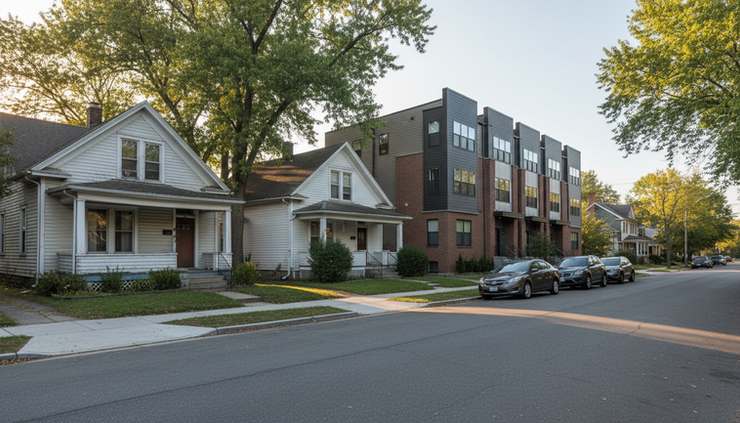
Hot and cooling markets can exist in the same metro area
One of the biggest mistakes is treating an entire metro as one single market.
In a fast-growing city, the close-in neighborhoods with short commutes and limited housing may stay competitive. Farther-out areas with lots of new construction may cool because buyers have more choices.
The opposite can happen too. In an expensive coastal metro, the core city may slow while more affordable suburbs stay active. Buyers often follow the payment, not the map.
Here are the patterns that tend to separate hot from cooling areas:
Hotter markets often have | Cooling markets often have |
Strong job growth | Slower hiring or industry pullbacks |
More affordable prices compared with incomes | Prices that jumped faster than wages |
Limited inventory | Rising inventory and more new supply |
Continued population growth | Slower migration or out-migration |
Lower total carrying costs | Higher taxes, insurance, or HOA costs |
No single factor tells the whole story. A market can have great jobs but poor affordability. Another can have slower growth but very little supply. The balance is what matters.
What to watch next
If you’re trying to understand where a housing market is headed, don’t rely on national headlines alone. Watch the local signals.
Pay attention to:
How long homes are sitting before they sell
Whether sellers are cutting prices
How many new listings are coming on the market
Whether major employers are hiring or pulling back
How local wages compare with monthly housing costs
Whether people are still moving in
The U.S. housing market probably won’t move in one clean direction anytime soon. Some areas will keep growing because they offer jobs, relative affordability, and lifestyle appeal. Others will keep cooling because prices rose too far, rates changed the payment, or supply caught up with demand.
If you’re weighing a move or trying to make sense of your local market, it helps to talk through the details with someone who knows the area. You can contact Anne Hale Homes to ask specific housing questions and get a clearer read on what’s happening where you live.
The big takeaway is simple: housing is local. Rates set the weather, but jobs, inventory, income, and migration decide what it feels like on the ground.


Comments